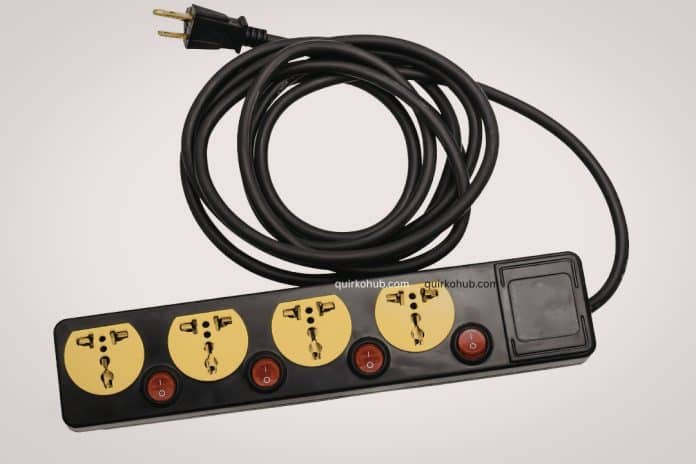
Power surges occur more often than perceived. For the average home, surges happen a multitude of times each day. These surges are frequently generated from within the home, by devices with heavy usage such as refrigerators, air conditioners, and other motors that demand high power, printers, and even photocopiers. Other events that can create power surges include tripped circuit breakers, power restoration after an outage, short circuits, and problems with the utility company’s equipment.
The Surge You’re Not Seeing
While the voltage levels of these internal surges aren’t as high as a lightning strike, which can easily exceed 100 million volts, they can carry 500 to 2,000 volts. That’s far above the 120 volts the typical home outlet provides: more than enough to ruin the capacitors on a circuit board. Despite the randomness of externally generated surges, in some ways you can think of this 80% as the part you have the most control over. You can’t unplug your refrigerator every time it turns off, but you can take steps to contain the surge within its circuit and not let it spread to your laptops and smart gadgets across the house.
One of the easiest, and cheapest, is plugging as many of your electronics into a surge protector as possible. A good one will block excess voltage from reaching your gadgets, though it’s by no means a perfect or fool proof solution for all types of surges. Make sure you’re using one rated for the wattage of all your attached devices and that it has indicators showing its internal protection circuits are still functional.
Backup Power and Voltage Quality
When it comes to generator size, the most common mistake is purchasing one that isn’t powerful enough. Buying a generator that produces the same power you typically use is just the starting point; a generator with capacity to spare both ensures a longer lifespan and avoids overloading it. Households sourcing backup power through suppliers like powergeneratordepot.com should pay close attention to this.
Every one of your appliances has an identical plate listing its power requirements. This is the place to look for the cumulative power you’ll need to replace it.
Don’t, however, make the mistake of simply adding together the power requirements of all the devices you expect to run concurrently. The suspect washing machine jarred into life when one new appliance turned on can soon lead to another outage. If you have backup power, you own an inverter generator, the vast majority of which will gracefully and automatically throttle their output up and down as the load changes. Even so, it’s far better to buy a somewhat larger generator of this type than you’ll ever be tempted to replace it with.
Build a Tiered Protection Strategy
It’s not a strategy being reliant on a single power strip. It’s a single layer of defense in the wrong place.
True protection works in two steps. The first is a whole-house surge protector right at your electrical panel, it’s categorized as Type 1 or Type 2 based on where in the service line of your house it’s located. This device uses metal oxide varistors to redirect large transient voltage spikes into the ground before your home’s branch circuits are exposed to them. When you’re selecting one, take a look at both the joule rating (total energy the device can absorb before it quits) and the clamping voltage (the level at which the device starts routing current). Lower clamping voltage means faster, more solid defense.
The second step is point-of-use protection, quality surge strips with their own MOVs right at the outlet, protecting computers, televisions, and home networking gear. This takes care of the stuff that leaked past the device on the panel and protects against the internal micro-surges that the whole-house device just can’t really deal with.
Both of these layers depend on one thing working out right: a proper grounding system. MOVs re-route excess energy down into the ground, which means that if the grounding infrastructure of your building, the copper rods and wiring that serves as the physical escape route for the excess electricity, is lacking or corroded, your surge protection is mostly not going to work. It’s worth having an inspection if the building is quite old.
Anything that you ought to see for sale as a surge protector really needs to have UL 1449 certification. That’s the Underwriters Laboratories standard for Surge Protective Devices and anything else out there isn’t a safety device, it’s a marketing product.
The Moment Power Comes Back on
Equipment damage is often attributed to outages, and, in part, this is a fair assessment. But there’s another step in the process that also causes damage, and most people don’t think about it.
When utility power rushes back into a building after a blackout, the voltage doesn’t stabilize immediately. The surge coincident with restoration can be greater than the original outage, and all those devices left on standby or even still on and running during the outage take the hit.
The solution: before the utility power returns, unplug the sensitive equipment or switch it off at the power strip. Let the voltage come back to normal for a minute or two and then reconnect the equipment.
Where the Money Actually Goes
Most of the time, equipment doesn’t just die one day. It dies slowly, drains a little more power somewhere else in the house than it needs to, and gets replaced a few months or even years earlier than necessary. Yet, the homeowner doesn’t make the connection back to the panel. By putting a plan in place to protect equipment at the panel, near the equipment itself, providing clean power during outages or normal operation, and selecting better equipment, you can guard against nearly every cause.

