
Morocco’s cities are not arranged for easy reading. They reveal themselves gradually, through sound before sight, through routine before revelation. Medinas fold inward. Mountains rise without announcement. Modern districts sit close enough to the old to feel like continuations rather than replacements. Life here does not separate history from the present tense — it layers them.
What makes Moroccan cities compelling is their refusal to become static. They remain busy, imperfect, and deeply lived in. Streets are not preserved; they are used. Traditions don’t sit still long enough to be framed. To move through these places is to accept density, repetition, and a pace set as much by people as by geography.
Daily Rhythm Inside the Medina of Marrakech
Marrakech operates on proximity. Within the medina, distance is measured less by length than by interruption. A straight line rarely stays straight. A short walk accumulates encounters — carts, conversations, doorways opening and closing without ceremony.
What stands out is not colour or noise alone, but organisation. The medina functions because it has always functioned. Trades cluster. Movement follows habit. Corners become reference points without needing names.
Living history here is not narrated. It is practised.
The Atlas as a Constant Presence
Beyond the city’s edges, the Atlas Mountains remain visible — sometimes sharply outlined, sometimes barely there, depending on light and weather. Their presence is not symbolic. It is practical.
The mountains influence temperature, trade routes, and daily expectations. They mark direction. They remind the city that it sits within a larger geography that does not adjust for convenience.
From rooftops and terraces, the Atlas feels close enough to matter, even when unreachable within a day.
Movement That Keeps Meaning Intact
Morocco’s modern infrastructure has altered how cities connect, but it has not flattened them. Travel remains experiential rather than abstract.
Taking the Marrakech to Casablanca by train allows transition without rupture. Landscape opens, then reorganises. Urban density changes texture rather than intensity. The journey feels connective — a thread rather than a jump.
Distance shortens, but identity holds.
Scale and Continuity in Casablanca
Casablanca is often described as modern, yet its character depends on accumulation rather than novelty. The city expands outward, but it also folds inward, carrying markets, neighbourhoods, and rituals forward with it.
Architecture reflects ambition, but daily life remains grounded. Cafés fill early. Streets stay active. The ocean’s proximity shapes atmosphere without dominating it.
Casablanca feels less like a contrast to older cities and more like an extension — a place where Morocco’s present speaks clearly without denying its past.
Why Medinas Still Work
Medinas persist because they remain practical. Narrow streets create shade. Density encourages exchange. Proximity reduces distance between daily needs.
What appears chaotic to outsiders is, in practice, finely tuned. Routes are remembered. Sounds signal location. Timing replaces signage.
The medina does not need to be decoded. It needs to be followed.
Craft, Trade, and Repetition
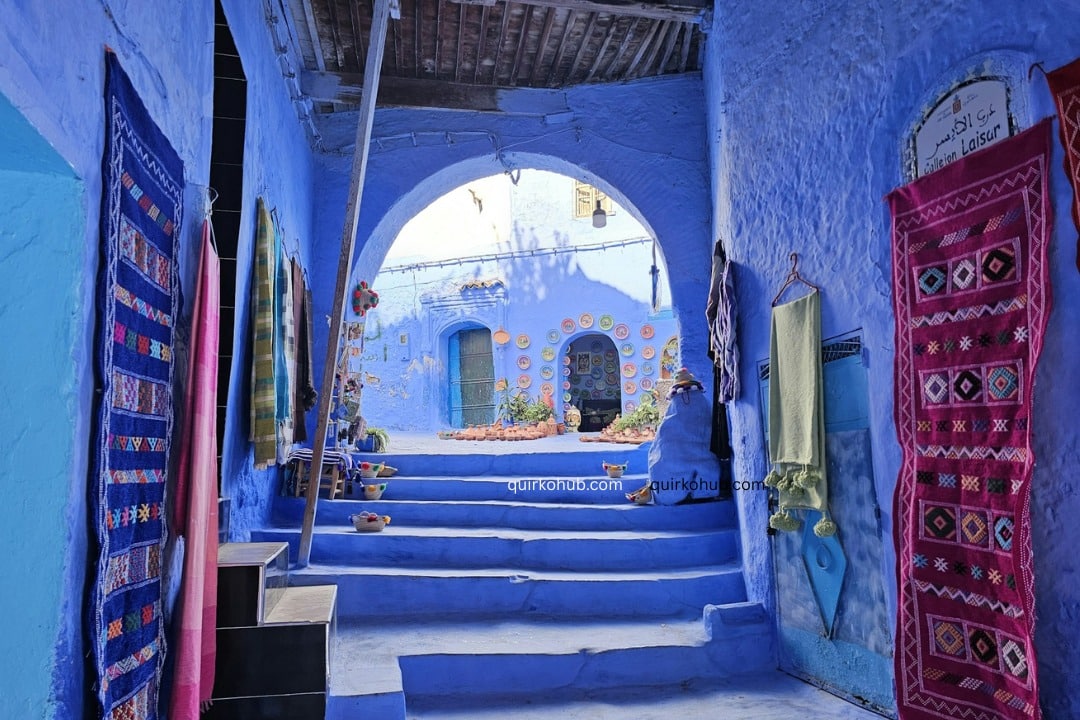
Work in Moroccan cities remains visible. Crafts are not hidden behind glass. Production happens alongside sale, explanation, and reuse.
This visibility keeps tradition alive. Skills transfer through observation rather than instruction. Mistakes are corrected in real time. Knowledge circulates.
What survives here is not nostalgia, but usefulness.
Cities That Move at Human Speed
Despite traffic and growth, Moroccan cities retain spaces that slow movement naturally. Courtyards interrupt streets. Markets redirect flow. Prayer times recalibrate schedules.
This built-in pause prevents uniformity. It allows individuals to choose pace rather than submit to it.
Cities breathe because they were not designed to be rushed through.
Between Public and Private Life
One of Morocco’s defining urban qualities is how fluidly space shifts from public to private. A door opens to reveal a home, a workshop, a café. Boundaries exist, but they are permeable.
This permeability fosters familiarity. You learn places by repetition, not instruction. Over time, cities feel navigable because they allow you to settle into them.
Belonging is gradual, not declared.
Geography as Urban Partner
Mountains, coastlines, plains — Moroccan cities do not dominate their surroundings. They negotiate with them.
The Atlas shapes water access. The ocean moderates climate. Deserts influence trade and architecture. Urban life remains responsive rather than imposed.
This responsiveness keeps cities distinct from one another, even as they modernise.
Why These Cities Endure
Marrakech and Casablanca endure not because they preserve the past, but because they keep it active. History here is not staged. It is maintained through use.
Medinas adapt. New districts absorb old habits. Infrastructure supports movement without erasing meaning.
In Morocco’s cities, life does not move away from history. It moves with it — sometimes unevenly, often loudly, always forward — carrying memory not as burden, but as momentum.

