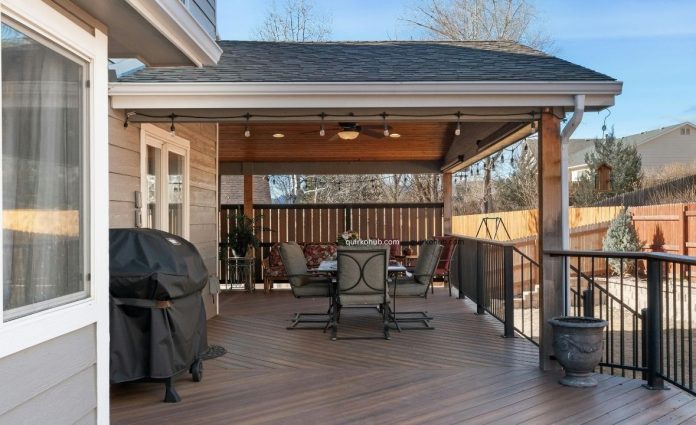
Patios, balconies, garden paths, pool surrounds, terraces. These spaces extend a home’s usable area and change how the property looks and feels. Picking the right surface material means weighing appearance against maintenance, weather resistance, and environmental impact. Wood plastic composite keeps coming up in those conversations for good reason.
What is WPC composite decking?
The material is made by combining wood fibres or wood flour with plastic polymers and additives. That mixture gets processed under controlled conditions and pushed through an extrusion die to form decking profiles. Many formulations use recycled wood fibres and recycled plastics, putting materials to work that would otherwise end up in landfill.
It’s not timber. It’s not plastic. It sits between the two, built to look like wood while holding up better outdoors. That in-between position is the whole point. Real timber in an exposed location needs constant upkeep. Composite boards don’t.
Why people choose it
Maintenance. That’s the main draw, and it’s not close. Natural timber needs periodic staining, painting, sealing, or something else to keep looking decent. Composite decking skips all of that. You wash it down occasionally. Done.
The material also handles moisture, insects, decay, and weather exposure without deteriorating the way untreated timber does. Textured surface profiles improve grip around pools, gardens, and anywhere the ground gets wet regularly.
One thing worth knowing: not every composite product on the market performs the same. Formulation, profile design, installation method, and local climate all affect how a board holds up over years. Read the technical specs. Don’t assume two boards with “WPC” on the label are interchangeable.
The environmental picture
The manufacturing process pulls in recycled wood fibres and plastics, which reduces dependence on virgin materials and gives waste streams a second life. That’s a genuine advantage.
There’s a maintenance angle too. Because composite decking doesn’t need regular painting or sealing, fewer chemical coatings end up in the soil over the product’s lifetime. Manufacturers who take this further emphasise recyclable inputs and responsible sourcing across their supply chains.
None of that makes it perfectly green, though. The material contains plastic. Its real environmental footprint depends on what goes into it, how much energy the factory uses, how far it ships, how long it lasts, and what happens when someone eventually rips it out. A one-line sustainability claim doesn’t tell you much. The full life cycle does.
Design options across different homes
Composite decking is available in a variety of profiles, textures, colours and finishes. Embossed wood-grain boards are a convincing imitation of wood. Smoother profiles provide a more modern look. Hollow cross sections need different structures than solid cross sections.
A warm wood tone suits a traditional garden. Darker grey or charcoal boards fit a modern exterior. Matching fascia boards, trims, and accessories tie it together so the deck doesn’t look like a patchwork of unrelated parts.
Beyond the deck itself
The same composite concept works for more than just decking.
Fencing is the obvious extension. Composite fence panels provide privacy and mark boundaries around gardens, patios, and properties. Homeowners and contractors looking for coordinated systems that share materials and colour palettes often find companies described as a wpc fencing supplier when researching options.
Exterior wall cladding is the other common application. Composite panels add texture to building façades while working as a protective outer skin. A composite cladding supplier typically carries different profiles, colours, and dimensions for residential and commercial projects.
Running the same material family across decking, fencing, and cladding gives an outdoor space a consistent look. Everything ages at the same rate and in the same way. Mix material types and that consistency disappears.
How manufacturing shapes quality
Board quality begins at the production line. Wood fibres, plastics and additives are prepared, dried and combined in controlled proportions. The mixture is heated and forced through an extrusion die that forms the profile.
Then boards are surface treated and embossed and sanded or both. They are then cut to size and tested for strength, moisture absorption, UV stability and surface appearance. The controlled process means consistent dimensions and repeatable finishes board to board, which directly translates to cleaner installation and less waste on site.
What to think about before buying
Colour is the easy decision. The ones that matter are harder. What’s the deck for? What’s the climate like? How does water drain off and away from the structure? What subframe design does the manufacturer specify? What slip rating does the board carry?
Joist spacing needs to follow the technical guidelines exactly. Drainage underneath the deck needs to work properly or standing water creates problems over time.
Before committing, compare warranties, certifications, material composition, and maintenance expectations. Products sitting on the same shelf under the same “WPC” banner differ more than most buyers realise until something goes wrong.
Taking the long view
The look of timber without the upkeep. Recycled material content. Resistance to the things that eat away at outdoor surfaces. A range of designs wide enough to fit most projects. That’s what composite decking brings to the table.
Whether it’s right for a specific property depends on the budget, the climate, and what the space actually needs to do. A brochure won’t answer those questions. Checking material composition, manufacturing standards, installation requirements, and expected service life will. The material does its job. Matching it to the right project is where the real decision sits.

